
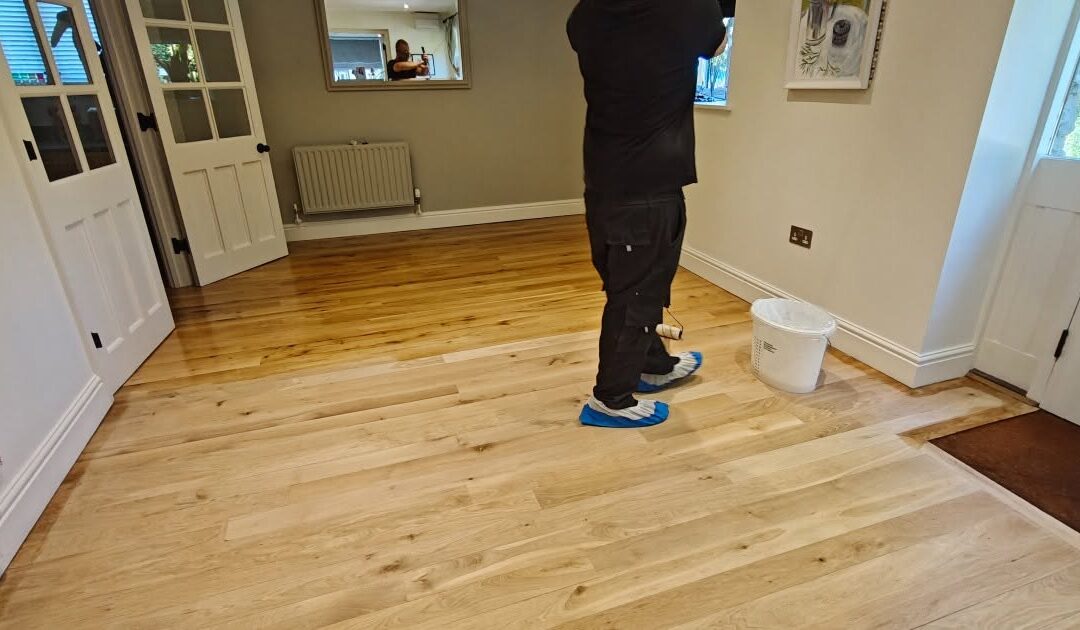
Engineered oak flooring is designed to combine the appearance of solid wood with added stability, but what happens when the surface becomes scratched, uneven or has been badly sanded in the past?
One of the questions we are often asked is whether engineered oak flooring can actually be sanded and restored. In many cases, the answer is yes, provided there is enough of the real wood wear layer remaining and the floor is assessed carefully before work begins.
A recent engineered oak floor restoration provided a particularly good example. The floor itself still had plenty of life left in it, but a previous sanding attempt had left visible marks running across the surface.
These are known as chatter marks.
What Are Chatter Marks on a Wooden Floor?
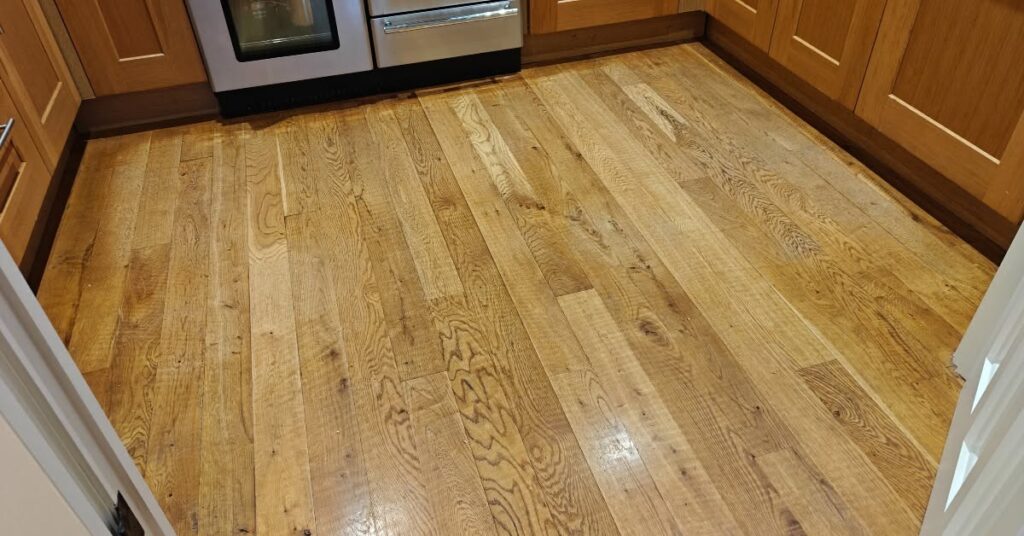
Chatter marks are repetitive lines, ripples or slight ridges that can appear across a wooden floor after sanding.
Rather than leaving the surface completely flat, the sanding process creates a series of small imperfections. Depending on the light and angle from which you view the floor, they may look like faint horizontal lines or waves across the timber.
On this engineered oak floor, the chatter marks were affecting the overall appearance of the wood. Instead of seeing a smooth, even oak surface, the marks interrupted the grain and made the floor look dull and uneven.
Chatter marks can be caused by several factors, including the sanding machinery used, the condition or set-up of the equipment and the sanding technique itself.
Removing them requires more than simply running another sanding machine over the floor.
Can You Sand Engineered Oak Flooring?
Engineered wood is different from solid timber flooring.
Rather than being made from one solid piece of wood, engineered flooring normally has several layers, with a real hardwood layer on the surface. In this case, that surface was oak.
It is this top layer, often called the wear layer, that determines whether the floor can safely be sanded.
Some engineered oak floors have a relatively thick wear layer and can potentially be sanded several times during their lifetime. Others have a much thinner surface layer, meaning far greater care is required.
Before sanding an engineered floor, it is therefore important to establish how much usable timber remains. Removing too much material can sand through the oak layer and permanently damage the flooring.
This is one of the reasons professional assessment is particularly important with engineered floors.
Restoring the Engineered Oak Floor
For this project, our aim was not simply to remove the existing finish. We also needed to correct the previous sanding marks and create a completely flat and uniform surface.
We used a combination of belt sanding and planetary sanding.
The belt sander allowed us to remove the existing finish and work through the surface imperfections. This was followed by planetary sanding to refine the floor further and produce the smooth, even finish needed before sealing.
Using the two sanding processes together gave us much greater control over the final surface.
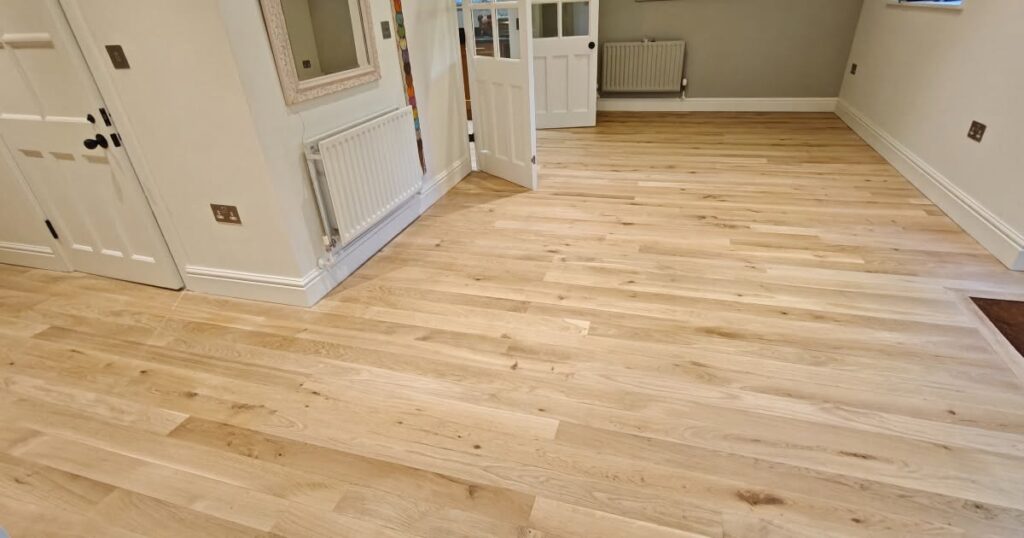
The chatter marks disappeared, the oak grain became much clearer and the floor once again felt smooth and consistent underfoot.

Why the Sanding Process Matters
Professional wood floor sanding is not simply about removing the top layer of a floor.
The sequence of sanding, machinery used and progression through different abrasives all influence the finished result.
This becomes even more important when dealing with an existing problem such as chatter marks. Sanding too aggressively risks unnecessarily reducing the wear layer, while sanding too lightly may leave the imperfections visible beneath the new finish.
With engineered oak, the objective is to remove only the amount of timber necessary to correct the surface.
Once the previous sanding marks had been removed, we were able to refine the floor to create the smooth surface needed for the new protective finish.
Finishing the Oak with a Satin Protective Coating
Once sanding was complete, the floor was sealed using Loba Speed.
We chose a satin finish, which gave the oak a natural appearance without creating an overly glossy surface.
The finish helps protect the timber from everyday wear while still allowing the colour, grain and character of the oak to remain the main feature.
The difference was particularly noticeable compared with the floor before restoration. With the chatter marks removed and the surface properly prepared, light reflected much more evenly across the boards and the natural variation within the oak became visible again.

Is It Worth Restoring Engineered Wood Flooring?
A worn or badly finished engineered floor does not necessarily need replacing.
If the wear layer is suitable for sanding, professional restoration can address issues such as:
- Scratches and surface wear
- Dull or tired finishes
- Previous poor-quality sanding
- Chatter marks and sanding lines
- Uneven areas
- Discolouration within the existing finish
Restoring the existing floor can retain the original oak while giving the room a dramatically fresher appearance.
However, engineered floors need to be approached differently from solid timber. Before recommending sanding, we assess the condition and construction of the floor to make sure restoration is appropriate.
Thinking About Restoring an Engineered Oak Floor?
If your engineered oak flooring is scratched, dull, uneven or showing marks from a previous sanding job, it may still be possible to restore it.
A professional assessment can establish whether there is enough wear layer available and what sanding and finishing process will give the best result.
In this case, careful belt and planetary sanding completely removed the chatter marks and transformed a dull, uneven engineered oak floor into a smooth, natural-looking surface with a durable satin finish.
If you would like advice about sanding or restoring an engineered wood floor in Bristol, Somerset or anywhere in the South West, get in touch to arrange an assessment and quotation.
